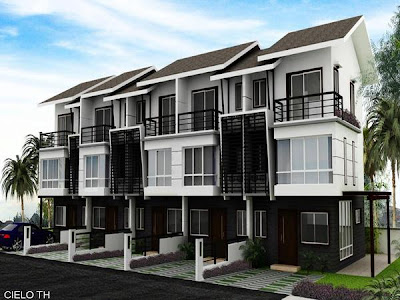
Tres Palmas
A wellspring of Charmed Living. Tres Palmas breathes a new way of living, in a place that calms your mind and enlivens your spirit! Tres Palmas is a private and serene community. Its low density design boasts over 60% open space and a minimum of three units to a floor establishing a sense of peace and exclusivity. The development will include three mid-rise residential buildings and a commercial arcade that will service the community. HLURB LTS # 24700.
Mountain House Royale
Come home to Mountain House Royale, Pinsao, Baguio City, Philippines where the Earth meets the Sky. A marriage of Nature and Modern Architecture on a tight knit subdivision with Mediterranean theme.
Mountain House Baguio
Breathe in the Crisp Mountain Air and savor the breath-taking views amidst the foggy hills of Mountain House Baguio and the serene neighborhoods of your own home.
The Residences at Brent
A high-end residential condominium development inside the Brent International School Baguio campus. Coming Home to The Residences at Brent is almost like a nostalgic trip back to what Baguio was in our childhood: the quiet charm; the unhurried pace where time seems to stand still; the cozy country home where the family could spend days together, bonded by simple joys and pleasures; and the serene sanctuary where one can contemplate and while away one’s worries.
Pinesview Cottages
We take our cue from nature and give you the kind of open space planning within the structure to maximize wind flow and light penetration. Each home distinguished by the open and unique green architecture, extends the beauty of Pinesview Cottages seamlessly inside and out.
Elements Eco-Efficient Residences
Is a breath of fresh air, transforming an urban residential area into an Eco-Efficient paradise. Comprised of two residential towers rising 28 floors, and anchored by a multi-level commercial mall, Elements residences offers a lifestyle of convenience and pleasure complemented by first class amenities for the eco-conscious buyer.
Bolo Hills Beach Club and Residence
A community in a properly landscaped setting. Bolo Hills Beach Club and Residence gated community is a masterpiece of harmony, from its Mexican-style house design and amenities to the beautiful Bolo Beach backdraft.
Bolo Hills Beach Club and Residence is perfectly situated along the Lingayen gulf and well within a number of tourist spots and resorts, most notable of which is the world-famous Hundred Island National Park.
Marcons Suites
A 10 Unit Townhouse Complex, designed to your lifestyle and nestled in an exclusive Amparo Heights subdivision, Baguio City. Units have spacious living, dining area and bedrooms, ideal for big families or vacation homes. Equipped with Gas fireplace for cold nights. Parking space for 2 cars. Large attic for additional room for guests.
Finding Real Estate Property
9/06/2011
Unknown

Guidelines on Settlement of Estates
9/04/2011
Unknown
- An Estate is comprised of the real and personal properties of a decedent.
- A life insurance policy or a pre-need plan or a mutual fund placement is considered personal property.
- The beneficiary who will receive the proceeds under a life insurance policy or pre-need plan is an Estate.
- The owner of the life insurance policy or pre-need plan or mutual fund placement has become an Estate and needs to transact business with the company.

- “Extrajudicial” means “outside of court.”
- The heirs do not have to go to court to partition the properties left
- by the decedent.
- There are two (2) kinds of extrajudicial settlement:
- The decedent died intestate, i.e., without a valid will;
- The estate has no outstanding debts at the time of the extrajudicial settlement;
- The heir/s are all of age, or the minor heirs are represented by their judicial guardians or legal representatives;
- The extrajudicial settlement is made in a public instrument, stipulation or affidavit duly filed with the Register of Deeds;
- The fact of such extrajudicial settlement must be published in a newspaper of general circulation once a week for three (3) consecutive weeks; and
- The parties to the extrajudicial settlement shall file a bond with the Register of Deeds in an amount equivalent to the value of the personal property involved.

- THE SOLE HEIR. The one and only heir may adjudicate the entire estate to himself by means of an affidavit (called an “Affidavit of Self-Adjudication”) filed in the Register of Deeds of the place where the decedent resided.
- THE HEIRS* AGREEING AMONG THEMSELVES. The heirs may divide the estate among themselves by means of a notarized instrument filed in the Register of Deeds.
heirs, which must contain the following information:
- That the decedent left no will;
- That the decedent left no debt;
- Each heir’s relationship to the decedent (e.g. spouse, son, daughter, father, mother etc.);
- That they are the decedent’s only surviving heirs;
- An enumeration and a brief description of the decedent‘s properties, both real and personal, which the heirs are now dividing among themselves. The decedent’s Sun Life Financial life insurance policy; pre-need plan number; or mutual fund.
- if the deceased was single without children – surviving parents;
- if the deceased was single with children– legitimate and illegitimate children only;
- if the deceased was single with illegitimate children and surviving parents – surviving parents and illegitimate children only;
- if the deceased was married with children - legal spouse and illegitimate and legitimate children only; and
- if the deceased was married with illegitimate children – legitimate spouse, surviving parents and illegitimate children. Claimants are encouraged to seek the advice of their own legal counsel.
all the heirs have signed it.
bond is equivalent to the value of the personal property included in the extrajudicial settlement.
Deeds. The bond is simultaneously filed with the “Deed of Extrajudicial Settlement and Adjudication of Estate”.
once a week for three (3) consecutive weeks.

- By means of a petition filed in court.
- Where filed?
- If the decedent was a resident of the Philippines at the time of his death, the petition must be filed before the Regional Trial Court in the place where he resided at the time of his death.
- If the decedent was a resident of a foreign country at the time of his death, the petition must be filed in any Regional Trial Court in the province where he had estate.
required to be published in a newspaper of general circulation once a week for three consecutive weeks.
- SUMMARY SETTLEMENT OF ESTATES OF SMALL VALUE. An estate of small value is worth Ten Thousand Pesos or less, regardless of whether or not the decedent left a will.
- File a petition in court alleging that the estate is of small value.
- Publish a notice of the settlement proceedings in a newspaper of general circulation once a week for three (3) consecutive weeks.
- After completion of publication, the court may set the case for hearing and proceed summarily to settle the estate.
- File a petition in court praying for the probate of the will and settlement of estate of the decedent.
- The court will set a time and place for the probate and shall cause notice of such to be published in a newspaper of general circulation once a week for three (3) consecutive weeks.
- On the hearing date, the court will proceed with the probate of the will and distribute the estate to the heirs/legatees accordingly.
the petition will pray for the settlement of the estate of the decedent.

The Pride of Baguio City in the Philippines Products to Suit Everybody
4/13/2011
Unknown


Three Reasons Why Visit or Retire in Baguio City
4/06/2011
Unknown

The Cold Weather
Source

The Best Ways to Relax in Baguio City, Philippines
2/26/2011
Unknown
The City of Pines is the perfect place for some peace and quiet, a cheap place to relax in, too. But my first advice would be to find yourself a nice cozy room away from the center of the city.
Highly urbanized is what we have become, especially in the last decade. This gives both visitors and residents all the amenities of city life and a more hectic pace that comes with "development."
But there are many places here to "lose oneself" still, and that is what I and a lot of visitors love about the place.
Here then are some of my suggestions for a relaxing vacation in the City of Pines.
- Take long, leisurely walks
- On the east and south sides where there are lots of trees. Stay away from major roads.
- Go for the 'Cosmic Journey'
- The Maryknoll Ecological Sanctuary has a 14-station account of the evolution of the universe set in a secret garden in the middle of bustling Baguio City, in Camp Sioco, accessed via Marcos Highway. Picnic tables available, too.
- Get a 'Home Service" massage
- The rates here are only Php275-350 per hour and you'll get the best sleep of your life afterwards.
- Read a good book.
- Malls have bookstores where you can get best-sellers and second hand books. Or, better yet, bring that one you have been planning to read for a long time along on your trip.
- Play a nice round of golf.
- Go for a round of golf in one of two of our naturally air-cooled courses. Even if you are not a member of Camp John Hay or Baguio Country Club, special guest passes are available at slightly higher rates.
- Attend some art lessons or do some painting.
- In Baguio, you are surrounded by natural beauty and there are lots of subjects to choose from plus many places to whip out the canvas and prop up the easel. Art workshops are held at Tam-awan Village and at the Botanical Garden.
- Row a boat at the Burnham Park Lagoon in the early morning.
- When I want to be alone with the soothing sound of water and voices in the distance, I rent a rowboat for an hour or two and just go around the lake. Try it might just work for you, too.
- Plan an evening by the fireplace
Whether alone or with a special person or persons in your life, there's nothing like a warm fire and good conversation to soothe one's soul. Make sure to have a nice mug of hot cocoa to go with it, and maybe do some marshmallow roasting to round it all up.
Basically, do things for yourself that you have been postponing for the longest time, like having long conversations with your loved ones, or finishing the needlepoint you began a long time ago while the kids are out skating, or planning a meal using fresh ingredients from the Baguio City Market.
Explore a foggy mountain trail, Play a round of golf with your buddies, Read a book at Igorot Garden in Camp John Hay, Take some art lessons at Tam-awan Village Take a long, leisurely boat ride at Burham Park.
Courtesy of http://www.gobaguio.com/best-ways-to-relax-in-baguio.html

Buying Philippine Real Estate Properties
2/02/2011
Unknown

Buyers Guide: Philippine Real Estate Laws
1/29/2011
Unknown
- Only Filipino citizens and corporations (at least 60% Philippine-owned) are entitled to acquire land in the Philippines.
Non-Filipinos
- Non-Filipinos can acquire a Philippine real estate property if he/she has a Filipino partner. Either both partners share the property with equal rights, or the partner owns 51% or more and the remainder is owned by the non-Filipino partner.
- Non-Filipinos can likewise acquire Philippine real estate if he/she has a Filipino spouse who can make the purchase.
- Special visas are available for non-Filipinos who want complete and total control of a Philippine real estate property like condominiums and townhouse units. Qualifications for this visa are as follows:
- Applicant must be at least 35 years old.
- Applicant should meet the bank deposit requirements which can be withdrawn at a later date for your investments.
- Owning of houses or buildings is possible as long as the non-Filipino does not own the land on which the house is built.The land can be leased by the foreigner on a long term contract, and the house can be legally his.
- As an exception to this rule, a foreign acquisition of a Philippine real estate is allowed in the following cases:
- Acquisition before the implementation of the 1935 constitution.
- Acquisition through hereditary succession if the foreign acquire is a legal or natural heir. This simply means that when the non-Filipino is married to a Filipino citizen and the spouse dies, the non-Filipino as the natural heir will become the legal owner of the property. The same is true for the children. Every natural child (legitimate or illegitimate) can inherit the property of his/her Filipino father/mother even if he/she does not any Filipino citizenship.
- Purchase of not more than 40% interest in a condominium project.
- Purchase by a former natural-born Filipino citizen subject to the limitations prescribed by law.
- Filipinos who are married to aliens who retain their Filipino citizenship, unless by their act or omission, they have renounced their Filipino citizenship.
Dual Citizens
- Dual citizenship means having two citizenships and passports from two different countries. Dual citizenship allows the citizenship holder full rights of possession of Philippine real property. This is a new law and it is still unclear as to the procedures involved to implement it. Dual citizenship is now available for the following:
- Former Filipino citizens born in the Philippines, who have immigrated to another country and obtained citizenship of that country.
- A foreign spouse married to a Filipino citizen.
Former Filipino Citizens
- Former natural-born Filipino citizens, a.k.a. "balikbayans," are entitled to own a maximum of 1,000 square meters of residential land and one hectare of agricultural or farm land.
- For business purposes, a maximum of 5,000 square meters of urban land or three hectares of rural land is allowed by law. In the case of married couples, one or both of them may avail of the privilege provided that if both avail, the total area acquired shall not exceed the maximum.
- In the case of a transferee already owning an urban or rural land for business or other purposes, he/she shall still be entitled to be a transferee provided that when added to those already owned by him/her shall not exceed the maximum.
Non-Filipino Married to a Filipino Citizen
- If holding title as an individual, a typical situation would be that a foreigner married to a Filipino citizen would hold title in the Filipino spouse's name. The foreign spouse's name cannot be on the Title but can be on the contract to buy the property. In the event of death of the Filipino spouse, the foreign spouse is allowed a reasonable amount of time to dispose of the property and collect the proceeds or the property will pass to any Filipino heirs and or relatives.
Foreign Ownership as a Philippine Corporation
- Foreign nationals or corporations may completely own a condominium or townhouse. To take ownership of a private land, residential house and lot, and commercial building and lot, foreign nationals or corporations should form a Philippine corporation. The corporation is to be 40% foreign-owned (maximum) and 60% Filipino-owned (minimum), and with at least five [5] incorporators. Upon incorporation, a main bank account should be tied to it. A foreign national may be the sole person in the bank account, allowing him/her total control over the funds derived from the corporation and the income or sale of the asset or property.
Foreign Leasing of Philippine Real Estate Property
- A foreign national and or corporation may enter into a lease agreement with Filipino landowners for an initial period of up to 50 years and renewable for another 25 years.
Note: This document is for information purposes only. The user assumes all risks for its use. www.buyphilippinehomes.com assumes no responsibility for such use.
http://buyphilippinehomes.com/newspage75
http://buyphilippinehomes.com/newspage76

Townhouse Living: The Benefits
1/23/2011
Unknown

Guide in Title Transfer of Properties
1/22/2011
Unknown

The SELLER pays for the:
- Capital Gains Tax equivalent to 6% of the selling price on the Deed of Sale or the zonal value, whichever is higher. Withholding Tax if the seller is a corporation
- Real estate taxes due up to date of sale.
- Broker's commission.
The BUYER pays for the cost of Registration:
- Documentary Stamp Tax - 1.5% of the selling price or zonal value or fair market value, which ever is higher.
- Transfer Tax - 0.5% - 0.75 % of 1 % of the selling price, or zonal value or fair market value, which ever is higher.
- Registration Fee - 0.25% of the selling price, or zonal value or fair market value, which ever is higher.
- Incidental and miscellaneous expenses incurred during the registration process.
The "Deed of Absolute Sale" is a Legal Document for transfer of real estate property ownership.
- The Deed of Absolute Sale is brought to the Bureau of Internal Revenue for the Computation of Capital Gains Tax / Withholding Tax and Documentary Tax . After payment of Taxes.
- BIR will issue CAR (Certificate of Authority to Register)
- Pay Transfer Fees at City Treasury
- Pay Registration Fees at The Registry of Deeds and have Transfer of Ownership officially recorded.
- Registry of Deeds issue new Transfer Certificate of Title / or Condominium Certificate of Title.
Documents needed when transferring the title (TCT or CCT) to the new owner:
- Certified true copy of the title / and
- Tax clearance
- Notarized copies of the Deed of Sale
- Certified true copy of Tax declaration of the property
- Receipt from Bureau of Internal Revenue that the capital gains tax and documentary stamps have been paid
- Certificate of Authority to Register (CAR)
- Receipt of payment of the transfer tax and registration fees

Tips in Buying Properties
1/20/2011
Unknown

1. Make sure the "Transfer Certificate of Title" is authentic. The easiest way to check if the title to the property you are buying is authentic is by getting "Certified True Copy" of the title from the Register of Deeds. This office is usually located at the city or municipal hall where the property is located. Ask the seller of the property for a photocopy of the title -you will need the title number and the name of the owner to get a certified true copy of the title from the Register of Deeds.
2. Verify that title is clean - meaning the property is not mortgaged (no liens & encumbrances on the property). You can see that at the back of the title with the heading "Encumbrances". This page must be empty if you are told that the title is "clean". But sometimes the space for the technical description of the property on the front page of the title is not enough and the description of the property is continued on the "Encumbrances" page, this is of course all right.
3. Make sure that the land described on the title is really the land that you are buying. You can validate this at the Register of Deeds or by hiring a private land surveyor or a geodetic engineer. Land titles don't have any street name and number to pin point a property, it is a must to confirm that the actual property you are buying matches the technical description on the Transfer Certificate of Title.
4. Make sure that the sellers are the real owners. If you are buying from an individual property owner, ask for identification papers like passport or driver's license, it is also a good idea to talk to the neighbors or the Barangay Captain to confirm the identity of the sellers (you might as well ask some history of the property).
5. Confirm that the yearly real estate taxes are paid. Ask for certified true copies of the Tax Declaration and original Tax Receipts to confirm that real estate tax payments are up to date.
6 .Deal with License Real Estate Brokers only. They can protect Buyer's rights and prevent them from being a victim of illegal transactions and Fraud.
7. Only then, it is safe to proceed with the purchase of real estate in the Philippines.